
The Role of Server Management in Business Continuity
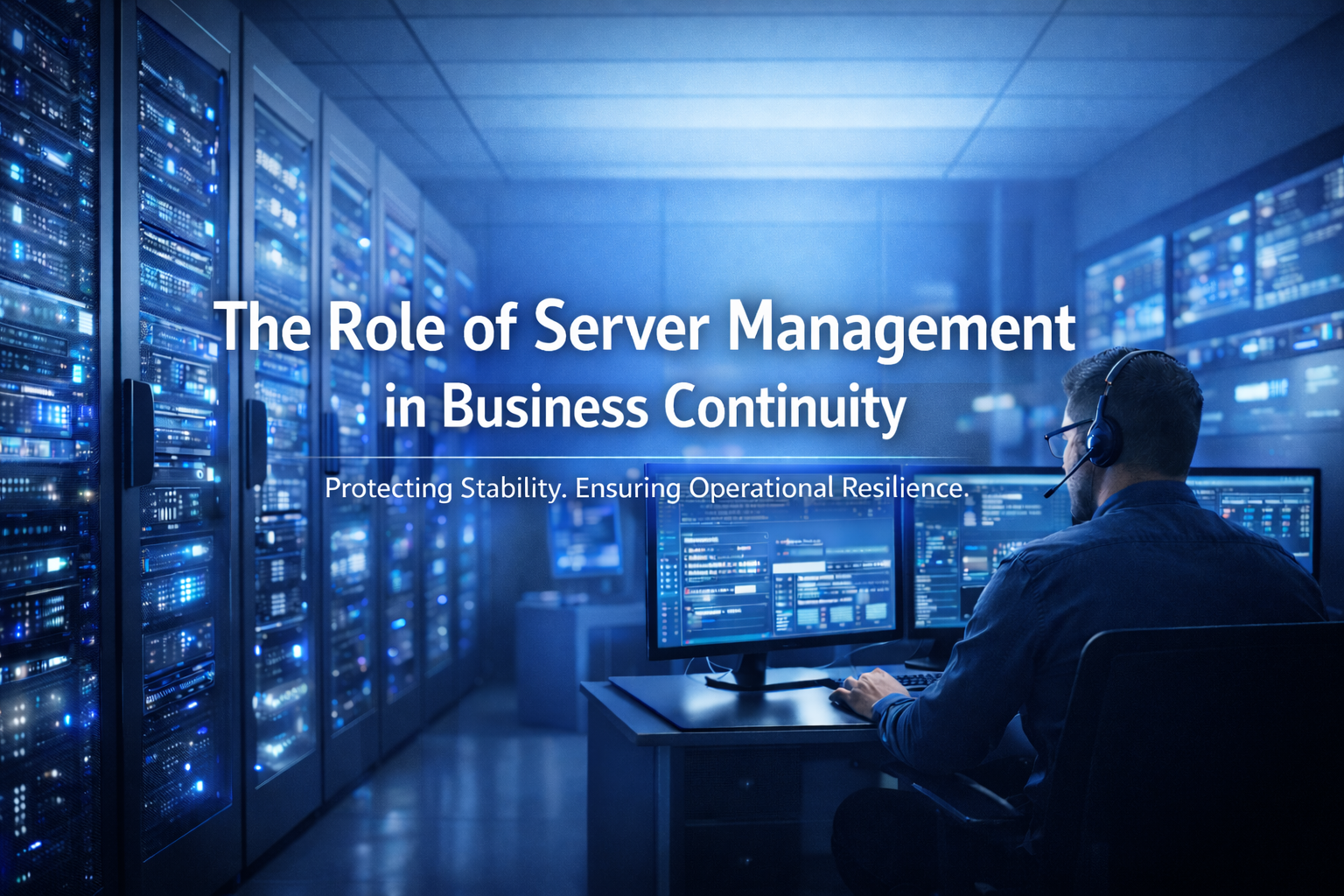
In today’s digital environment, servers are the operational core of modern businesses. They host applications, store critical data, support communication systems, and power internal workflows. When servers are stable, businesses operate smoothly. When they fail, operations can come to an immediate halt.
This is why effective server management is essential to business continuity.
Understanding Business Continuity
Business continuity refers to an organization’s ability to maintain essential operations during disruptions. These disruptions may result from hardware failure, cyberattacks, software corruption, power outages, or unexpected system overload.
While many organizations focus on recovery plans, true continuity begins with prevention, and that starts at the server level.
What Server Management Involves
Server management is an ongoing process that ensures servers remain secure, optimized, and fully operational. It is not a one time configuration but a continuous strategy.
Key components include:
• Continuous performance monitoring
• Regular security updates and patch management
• Backup verification and disaster recovery planning
• Capacity monitoring and resource allocation
• Threat detection and vulnerability management
• Hardware and software optimization
When properly managed, servers operate reliably with minimal disruption.
The Risk of Poor Server Oversight
Without structured server management, businesses face significant operational risks:
• Unexpected downtime that interrupts productivity
• Data loss due to failed or unverified backups
• Security vulnerabilities that expose sensitive information
• Reduced system performance affecting employee efficiency
• Delayed response to technical failures
Even minor server instability can affect multiple departments. A slow database server may delay reporting. A failed authentication server may prevent employees from accessing systems. The financial and reputational impact can escalate quickly.
How Proactive Server Management Supports Continuity
Proactive server management strengthens business continuity in several ways.
Reduced Downtime
Continuous monitoring detects irregularities early, allowing issues to be resolved before they disrupt operations.
Stronger Security
Regular updates and patch management protect servers from known vulnerabilities and emerging threats.
Reliable Data Protection
Routine backup testing ensures that critical data can be restored quickly if needed.
Performance Stability
Ongoing optimization maintains consistent system speed and responsiveness.
Faster Recovery
In the event of disruption, well managed servers allow for quicker restoration and minimal operational impact.
Server Management as a Strategic Function
Server management should not be viewed as a background IT task. It is a strategic safeguard for productivity, reputation, and revenue stability.
Organizations that invest in structured server oversight operate with greater resilience. They are better equipped to handle unexpected disruptions without compromising service delivery or internal performance.
At Serian Technologies, server and network management is approached as a core component of operational stability, ensuring systems remain secure, monitored, and aligned with business objectives.
Business continuity is not achieved by chance. It is built through proactive infrastructure management.
Take the Next Step
If your organization relies on stable systems to operate, now is the time to strengthen your server management strategy.
Contact Serian Technologies to discuss structured server and network management solutions designed to keep your business secure, responsive, and operational at all times.