
The Difference Between IT Support and IT Strategy
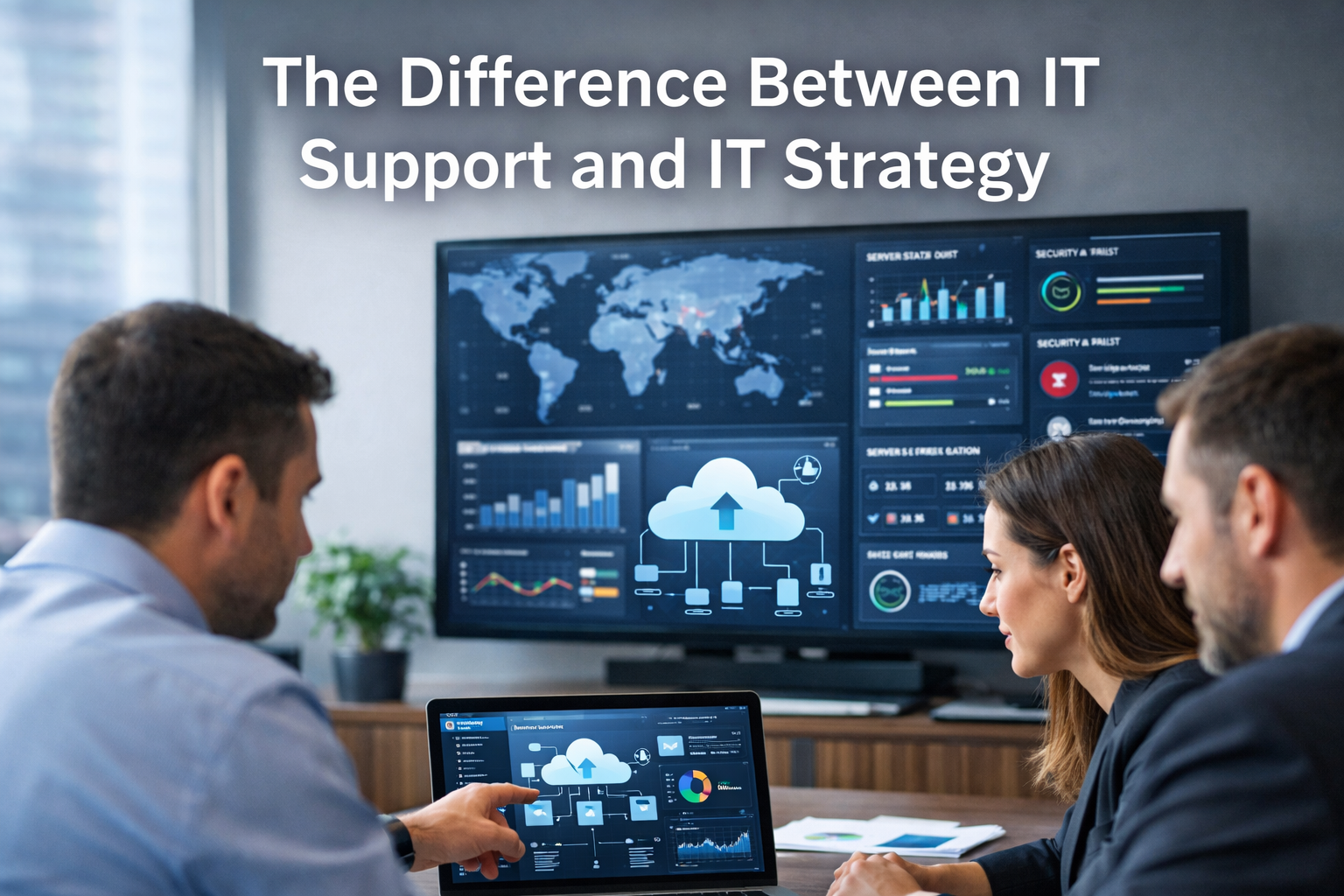
Many businesses rely on IT support to keep their operations running. When systems fail, support teams respond to fix the issue and restore functionality. This approach is essential for maintaining daily operations.
However, keeping systems running is not the same as positioning a business for growth. As businesses expand, their technology needs become more complex. Without a clear plan, systems become reactive, fragmented, and difficult to manage.
This is where the distinction between IT support and IT strategy becomes important. Understanding this difference helps businesses move from simply maintaining operations to building systems that support long-term performance and scalability.
What Is IT Support
IT support focuses on resolving immediate technical issues to ensure continuity of operations. It is reactive and task-oriented, addressing problems as they arise.
Typical IT support activities include:
Troubleshooting system errors and downtime
Resolving software and hardware issues
Assisting employees with technical challenges
Restoring access to systems and applications
Performing routine maintenance and updates
IT support is critical for keeping businesses functional. Without it, even minor technical issues can disrupt operations and reduce productivity.
However, IT support is primarily focused on the present. It ensures that systems work, but it does not necessarily ensure that they are optimized, secure, or prepared for future demands.
What Is IT Strategy
IT strategy takes a long-term, structured approach to managing technology. It focuses on how systems are designed, implemented, and maintained to support business objectives.
Rather than reacting to problems, IT strategy anticipates them. It aligns technology decisions with business goals and ensures that systems are scalable, secure, and efficient.
Key components of IT strategy include:
Aligning IT systems with business growth plans
Designing reliable and scalable infrastructure
Implementing security frameworks and risk controls
Monitoring system performance and identifying gaps
Planning upgrades, integrations, and future improvements
Ensuring business continuity and disaster recovery readiness
IT strategy transforms technology from a support function into a core part of business operations. It ensures that systems do not just work, but work effectively and consistently over time.
Key Differences Between IT Support and IT Strategy
1. Reactive vs Proactive
IT support responds after issues occur, focusing on immediate resolution.
IT strategy anticipates risks and implements measures to prevent disruptions.
2. Short-Term Fixes vs Long-Term Planning
IT support addresses current problems.
IT strategy plans for future needs, growth, and system evolution.
3. Issue Resolution vs Performance Optimization
IT support resolves technical faults.
IT strategy improves system performance, reliability, and efficiency.
4. Maintenance vs Business Enablement
IT support maintains existing systems.
IT strategy enables business growth by building systems that can scale.
5. Isolated Tasks vs Integrated Systems
IT support often handles individual issues as they arise.
IT strategy ensures that all systems work together in a structured and coordinated way.
The Risks of Relying Only on IT Support
Businesses that rely solely on IT support often face recurring challenges, including:
Repeated system failures due to unresolved root causes
Inefficient workflows caused by disconnected systems
Increased downtime and operational disruptions
Limited ability to scale due to outdated infrastructure
Higher long-term costs from constant fixes and adjustments
While these issues may appear manageable in the short term, they can significantly impact business performance over time.
Without a strategic approach, technology becomes a limitation rather than an asset.
How IT Strategy Transforms Business Operations
When businesses adopt a strategic approach to IT, the impact is noticeable across operations.
Systems become more stable and predictable
Teams work more efficiently with fewer disruptions
Data is better managed and more accessible
Security risks are reduced through structured controls
Decision-making improves with better system visibility
Growth becomes more manageable with scalable infrastructure
IT strategy creates an environment where technology supports the business consistently, rather than reacting to ongoing issues.
Final Thoughts
Maintaining functional systems is important, but it is not enough for long-term success. Businesses need more than reactive solutions. They need structured, forward-thinking technology management.
The difference between IT support and IT strategy lies in the ability to move from fixing problems to preventing them, and from maintaining systems to optimizing them for growth.
Organizations that embrace both are able to build reliable operations, reduce risk, and position themselves for sustained success.
In today’s business environment, how you manage your technology can determine how far your business can grow.
Build a Stronger IT Foundation for Your Business
If your business is relying only on IT support, it may be time to take a more strategic approach.
Serian Technologies works with businesses to design and manage structured, reliable, and scalable IT systems that support long-term performance.
By combining proactive strategy with dependable support, Serian helps businesses reduce risk, improve efficiency, and operate with confidence.
Contact Serian Technologies to learn how a well-defined IT strategy can strengthen your business operations.