
Microsoft 365 vs Google Workspace Which Is Right for Your Business?
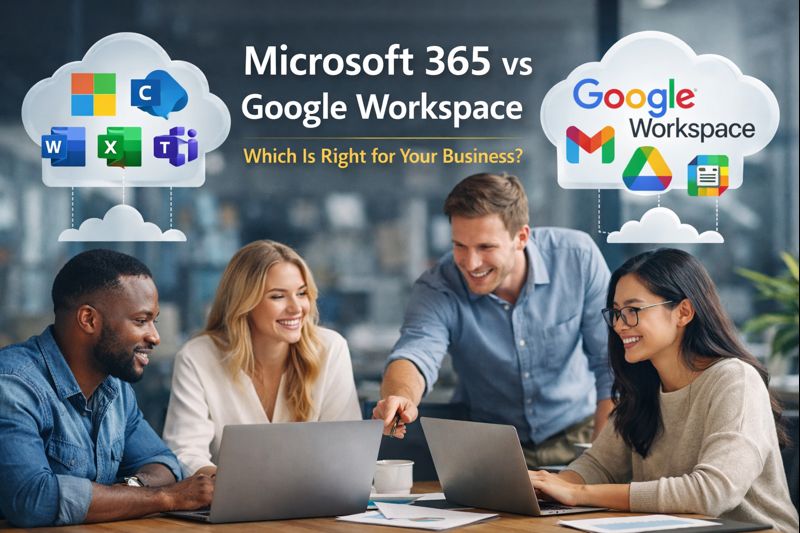
Microsoft 365 vs Google Workspace Which Is Right for Your Business?
Choosing the right productivity platform is one of the most important technology decisions a business can make. The tools your team uses for email collaboration file storage and communication directly affect productivity security and long-term growth. Two of the most widely used platforms today are Microsoft 365 and Google Workspace. While both are powerful, they take different approaches to helping teams work effectively.
Understanding these differences helps businesses choose a platform that aligns with how they operate today and where they plan to go in the future.
What These Platforms Offer
Both Microsoft 365 and Google Workspace provide core business tools that support daily operations. These include professional email cloud storage collaboration tools, video conferencing and productivity applications. While they solve similar problems they differ in structure, feature depth and management style.
The right choice depends on how your team works, how much control your business needs and how your data should be managed.
Microsoft 365 for Structured and Growing Businesses
Microsoft 365 is well suited for businesses that require structured workflows and advanced management capabilities. It combines cloud services with powerful desktop applications allowing teams to work both online and offline.
Businesses benefit from familiar tools such as Word Excel and PowerPoint alongside collaboration platforms like Teams SharePoint and OneDrive. These tools offer strong file control permission management and advanced security features. Microsoft 365 is often preferred by organizations handling sensitive data or planning to scale operations.
Google Workspace for Simplicity and Real Time Collaboration
Google Workspace is a cloud first platform designed for ease of use and fast collaboration. Tools such as Gmail Google Docs Sheets Slides and Drive allow teams to work together in real time from any location.
Because everything runs in the browser Google Workspace is easy to deploy and requires minimal technical setup. It is especially effective for small teams, startups and remote or hybrid work environments that value speed, flexibility and collaboration.
Key Differences Businesses Should Consider
While both platforms are reliable, they serve different business needs. Microsoft 365 offers deeper system control, advanced security configuration and robust desktop applications. Google Workspace focuses on simplicity, ease of adoption and seamless collaboration.
Businesses that need tighter access control compliance readiness and long-term scalability often choose Microsoft 365. Businesses that prioritize quick setup and real time teamwork often lean toward Google Workspace.
Security Deployment and Management Considerations
Both platforms include strong security features, but their effectiveness depends on proper configuration. Without professional setup businesses may face issues such as weak access control, unsecured data sharing or unused licenses.
Choosing a platform is only the first step. Correct deployment, ongoing management and user training are what ensure security productivity and long-term value.
How Serian Technologies Helps
Serian Technologies helps businesses assess workflows security needs and growth plans to determine whether Microsoft 365 or Google Workspace is the best fit.
From data migration and configuration to security policies and user training Serian Technologies ensures businesses get maximum value from their chosen platform with minimal disruption.
Conclusion
Choosing the right productivity platform plays a critical role in how teams collaborate, manage data and stay secure. Microsoft 365 and Google Workspace each offer powerful tools but the right choice depends on how your business operates and plans to grow.
Need help deciding which platform fits your business?
Let Serian Technologies help you choose, configure and manage the solution that supports productivity security and long-term success.